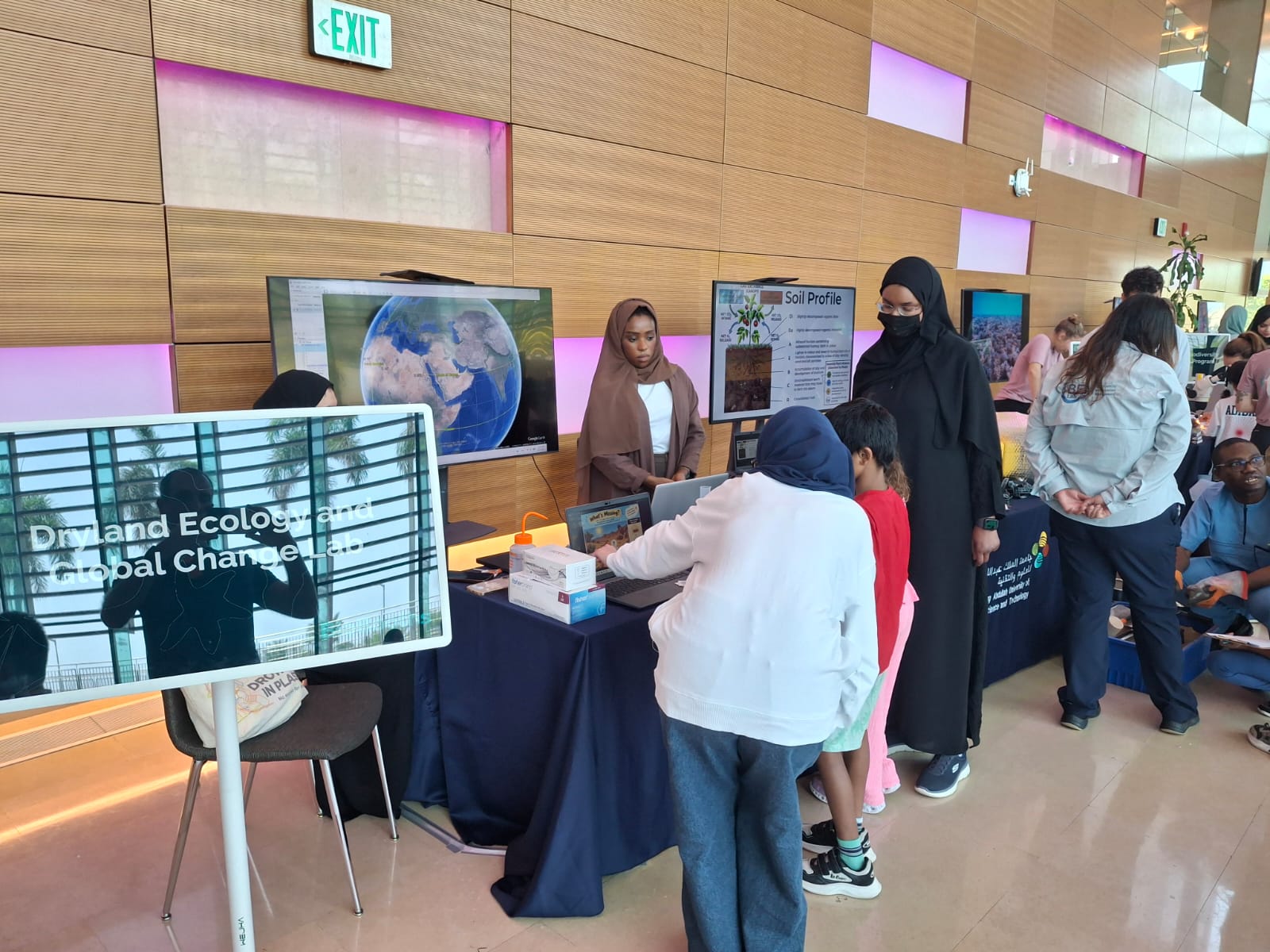
Dryland Ecology and Global Change Lab at KAUST – “BioBooths 2026”
Our lab participated in BioBooths 2026, KAUST’s annual biodiversity awareness and education event. Through our booth, we introduced students to dryland ecology and shared how our research contributes to understanding biodiversity
and ecosystem functioning in arid environments.
KAUST · 2026
EGU General Assembly 2026: microbial responses to global change
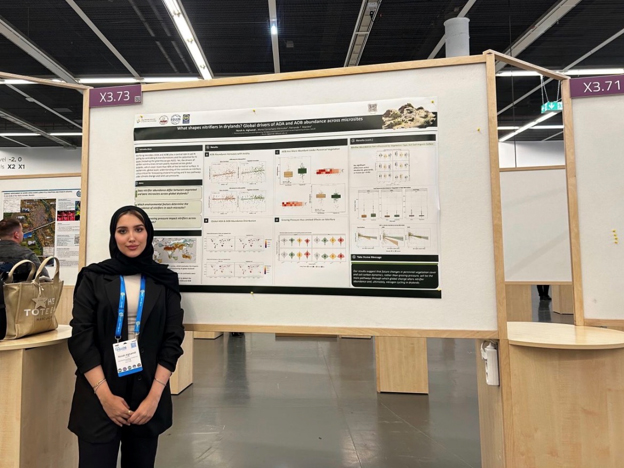
Norah Alghamdi presented her poster at the EGU General Assembly 2026 in Vienna, Austria, in the session “Microbial responses to global change: from physiology to ecosystem feedbacks.”
Her work, titled “What shapes nitrifiers in drylands? Global drivers of AOA and AOB abundance across microsites,” explores the environmental drivers influencing ammonia-oxidizing archaea and bacteria across dryland ecosystems.
Vienna, Austria · 2026
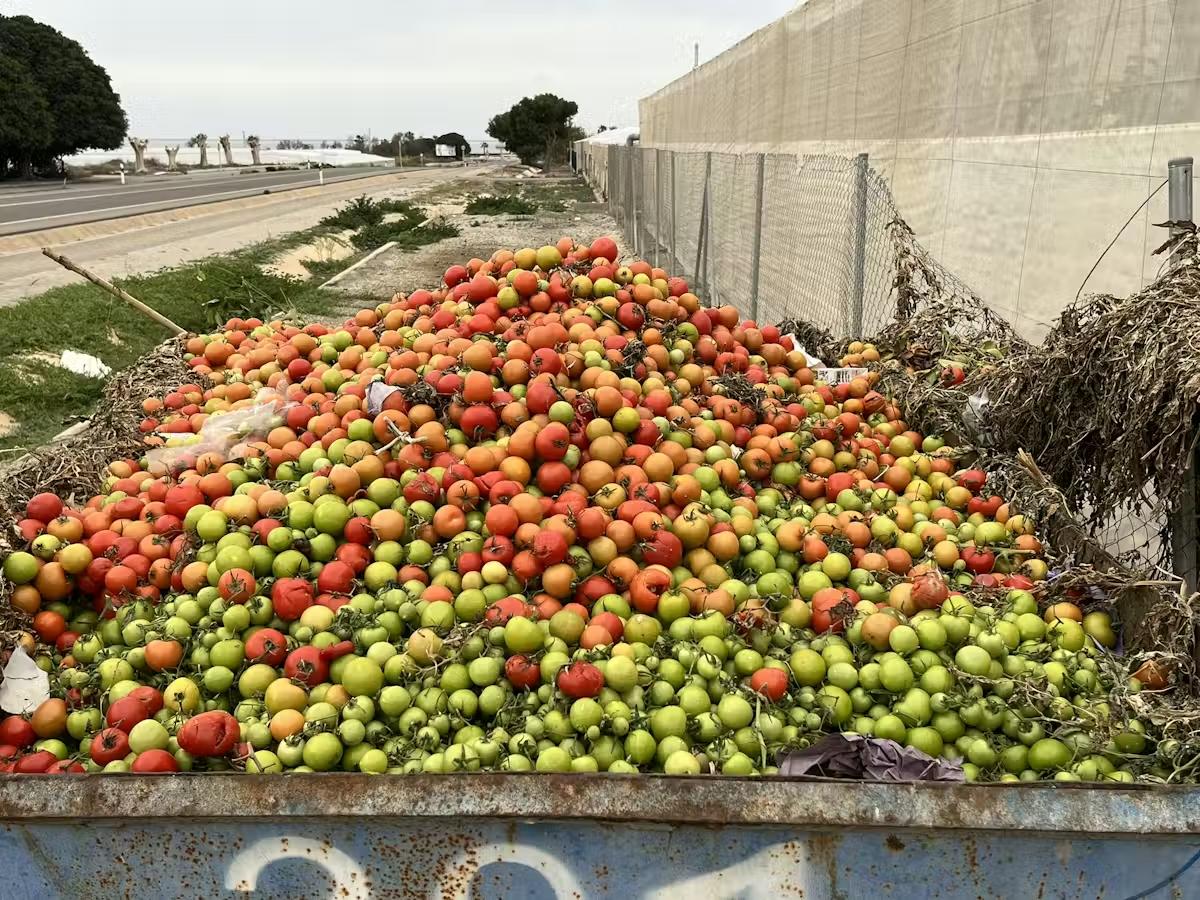
“Toneladas de frutas y verduras pudriéndose en el campo, otro síntoma de un modelo agrario insostenible”
An article published in The Conversation discussing how large-scale food waste reflects structural problems in current agricultural systems and sustainability challenges.
This piece highlights the need to rethink production, distribution, and consumption models in order to reduce waste and improve the resilience of food systems under global change.
Read article (in Spanish)
The Conversation · March 31, 2026
Earth Day 2026: water reuse and sustainability awareness
Members of the group participated in outreach activities focused on wastewater treatment, water reuse, and ecosystem resilience in arid environments.
The activity highlighted the role of treated sewage effluent in supporting sustainable land management and strengthening ecosystem resilience in dryland regions.
Read more
KAUST · 2026
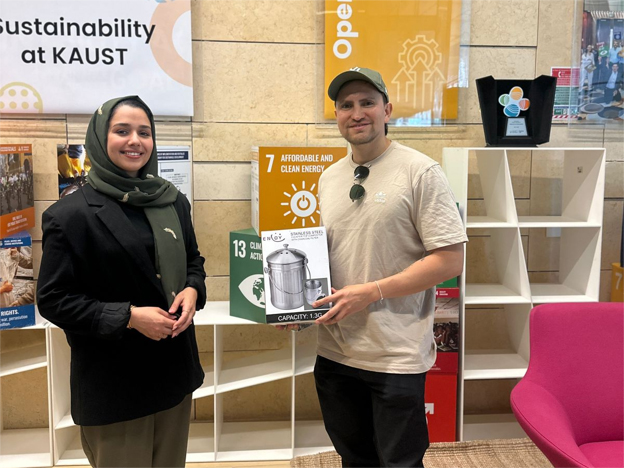
Students for Sustainability at KAUST: composting initiative
As part of Students for Sustainability, members of the group helped lead a composting initiative aimed at promoting waste reduction and sustainability awareness within the KAUST community.
The initiative encouraged circular practices and community engagement around more sustainable daily habits.
Read more
KAUST · 2026
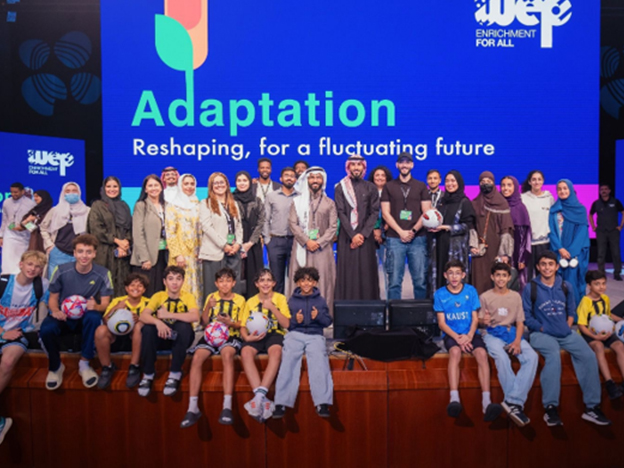
KAUST Winter Enrichment Program 2026
Members of the group supported the coordination and delivery of KAUST’s Winter Enrichment Program through the Office of Culture, Enrichment, and Engagement.
The program is one of KAUST’s major academic and cultural initiatives, connecting science, education, culture, and public engagement.
KAUST · 2026
Sustainable Supper Club
This community event explored practical approaches to mindful living through sustainable food choices, waste reduction, and shared learning.
The activity fostered community engagement through open discussions, collaboration, and informal exchange in a relaxed and interactive setting.
KAUST · 2026
Times Higher Education World Academic Summit at KAUST
Members of the group contributed to the organization of the Times Higher Education World Academic Summit at KAUST.
This was the first time the global higher education summit was hosted in the Middle East, bringing together international leaders in academia, research, and higher education.
Read more
KAUST · 2025
Saudi Food Future Forums 2025 at KAUST
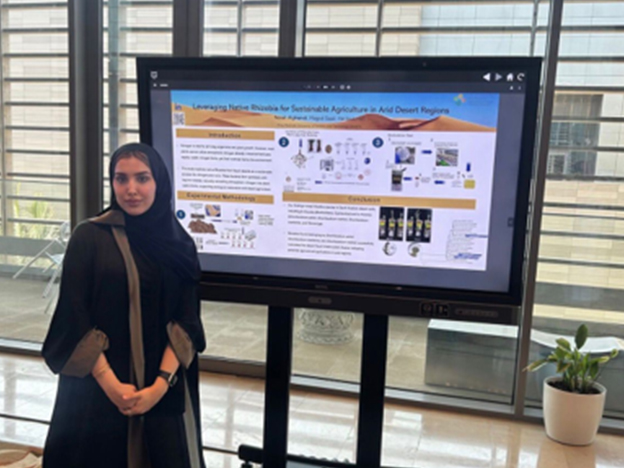
Norah Alghamdi presented her master’s research at the Saudi Food Future Forums 2025 at KAUST.
Her poster, “Leveraging Native Rhizobia for Sustainable Agriculture in Arid Desert Regions,” explored how native rhizobia can enhance crop productivity in desert environments, supporting more sustainable agriculture and food security
in arid regions.
KAUST · 2025
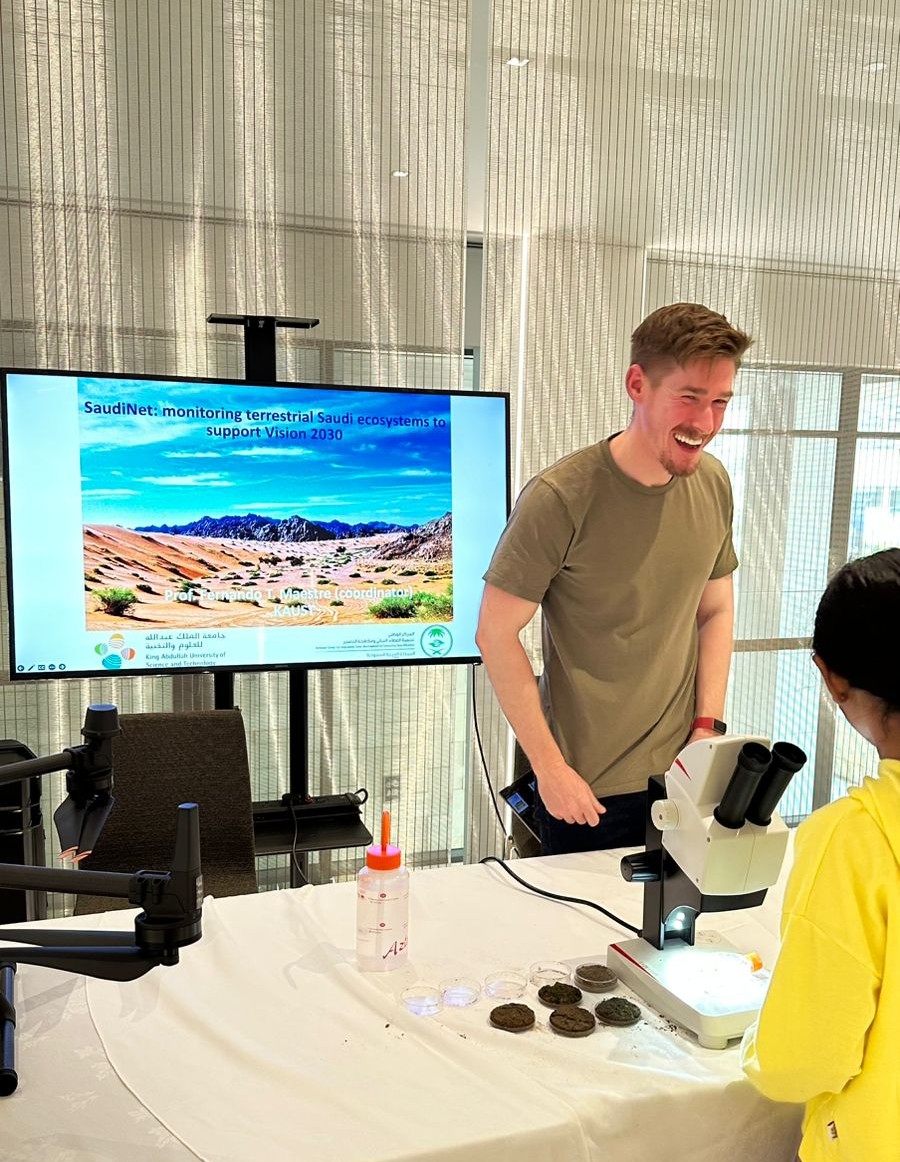
Dryland Ecology and Global Change Lab at KAUST – “BioBooths 2025”
Led by Prof. Fernando T. Maestre, our lab was proud to take part in this KAUST event celebrating biodiversity and engaging with the wider community.
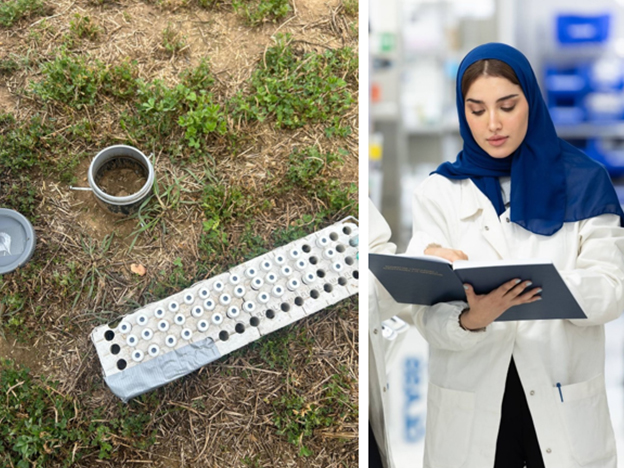
At our booth, we highlighted the role of biological soil crusts (biocrusts) in supporting biodiversity and maintaining ecosystem functioning in dryland environments—one of the core research areas of our group.
The activity also included biocrust samples and cyanobacteria isolated from KAUST biocrusts, helping communicate dryland ecology through visual and hands-on science.
KAUST · 2025
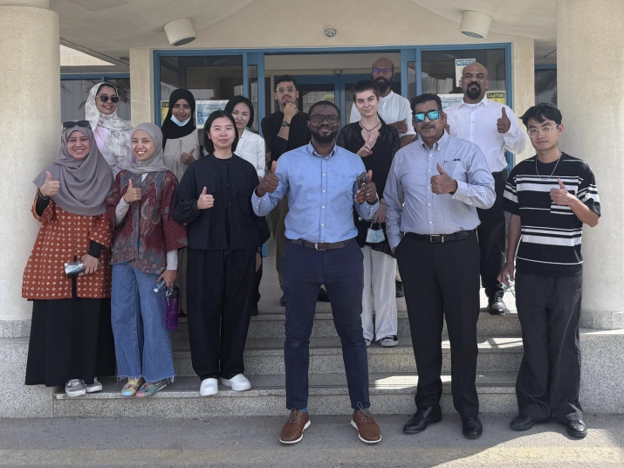
Training at the Institute of Agricultural Sciences, CSIC
Norah Alghamdi completed a research training stay at the Institute of Agricultural Sciences, CSIC, in Madrid, Spain, where she was trained in several tools related to soil organic carbon.
During this stay, she also contributed to field activities assessing warming experiments and greenhouse gas measurements.
Madrid, Spain · January–February 2025
KAUST Service Awards
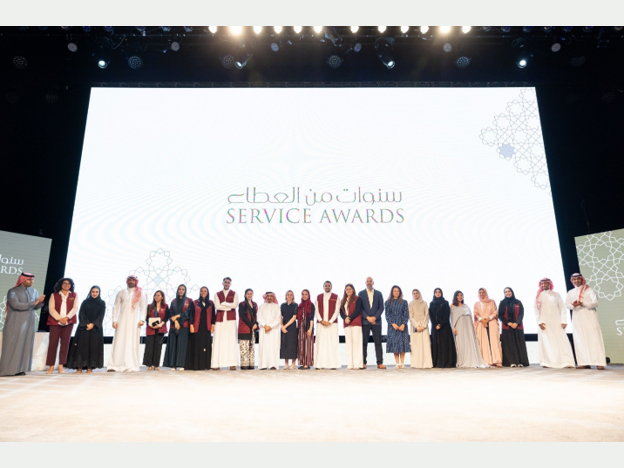
Members of the group volunteered in the organization of the KAUST Service Awards.
The ceremony recognized individuals who have made significant contributions to the university community.
KAUST · 2025
KAUST Convocation 2025
Members of the group supported KAUST’s 16th Convocation, contributing to the organization of an important academic ceremony for the university community.
The event welcomed a diverse cohort of students representing 58 countries.
KAUST · 2025
KAUST Academy Closing Ceremony 2025
Members of the group contributed to the organization and delivery of the KAUST Academy Closing Ceremony.
The event supported student recognition and celebrated academic achievements in a community-focused setting.
KAUST · 2025
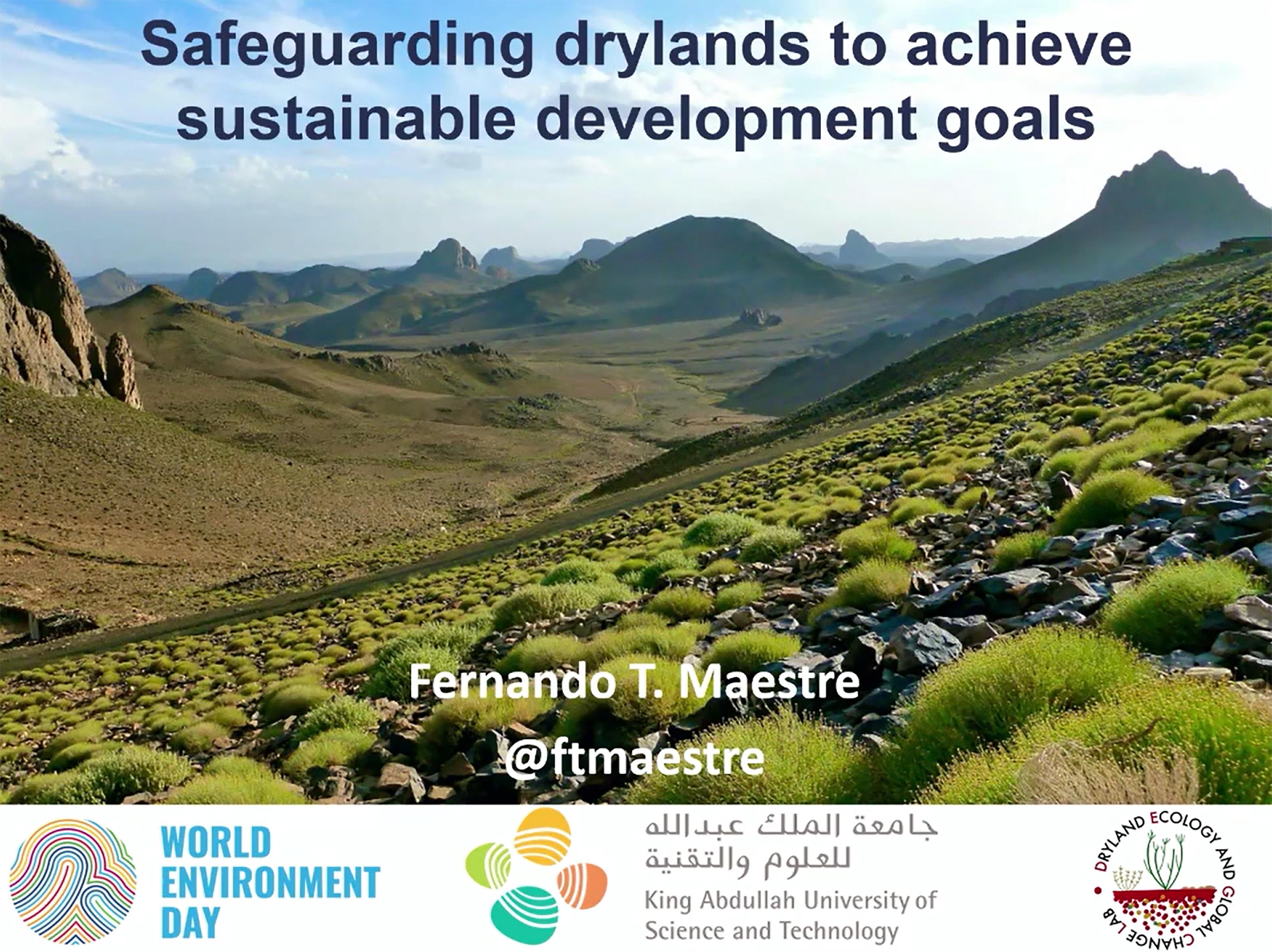
Safeguarding drylands to achieve sustainable development goals
Drylands cover more than 41% of the Earth’s surface and support nearly 40% of the global population, yet they are increasingly threatened by land degradation, desertification, and climate change.
In this seminar, Prof. Fernando T. Maestre explores the main environmental challenges affecting drylands and discusses solutions to promote sustainable resource use, protect biodiversity, and contribute to achieving the UN Sustainable Development
Goals.
Watch seminar
KAUST · Jun 6, 2024
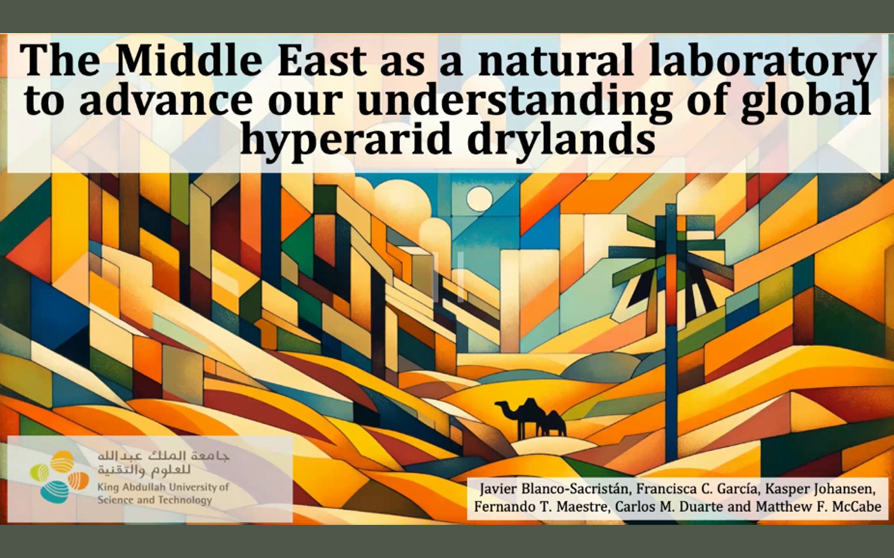
The Middle East as a natural laboratory to advance our understanding of global hyperarid drylands
In this seminar, Dr. Javier Blanco Sacristán presents the Middle East as a unique natural laboratory for advancing our understanding of global hyperarid drylands.
The talk explores the diversity of dryland ecosystems in the region, from mangroves and grasslands to shrublands and biological soil crusts, and discusses how studying them across temporal, spatial, latitudinal, and altitudinal gradients can provide
valuable insights into the functioning and future responses of drylands worldwide.
Watch seminar
KAUST · 2024
Falling Walls Lab KAUST: Unsustainable Desert Agriculture
Norah Alghamdi participated in Falling Walls Lab KAUST with a presentation titled “Breaking the Wall of Unsustainable Desert Agriculture.”
The event challenged participants to present their scientific breakthrough in just three minutes to the KAUST community and the general public.
KAUST · 2024
KAUST Commencement 2024
Members of the group supported KAUST’s 15th Commencement Ceremony, contributing to event coordination for one of the university’s major community celebrations.
The ceremony celebrated a graduating class of 465 students from 46 nations, including record numbers of Saudi and Saudi female graduates.
Thuwal, Makkah Province, Saudi Arabia · December 13, 2024